

A rainscreen façade is an outer skin cladding system attached to the primary (load-bearing) building structure, typically using an aluminium subframe and designed to create a continuous ventilation cavity between the building and the outer most skin. This ventilation cavity is often insulated to improve the thermal and acoustic performance of the wall structure.
The rainscreen façade system is a multi-layered, high-performance assembly of components that can be designed onto almost any kind of building, whether that be a new build, or as part of a planned refurbishment of an existing structure.
The Centre for Window and Cladding Technology (CWCT) defines rainscreen cladding as “a wall comprising an outer skin of panels and an airtight insulated backing wall separated by a ventilated cavity”.
Generally, all rainscreen systems have at least three key functions to fulfil:
- Primary weather defence to protect the building structure from the elements.
- Meet the specified building performance requirements such as thermal, fire and acoustic.
- Aesthetic outer skin of the structure that is attractive or pleasing on the eye.
Rainscreen facades can be manufactured from a variety of materials, including metals such as aluminium, copper, zinc, & steel.
Facades can also be created from mineral materials such as brick, stone, terracotta, porcelain or fibre cement and modern composite materials such as metal composites including a mineral core (MCM/ACM), high-pressure laminates bonded together (HPL) and timber composite options.
Due to such a wide array of materials, colours and finishes available, rainscreen facades are incredibly versatile, giving architects an opportunity to create unique and aesthetic building designs.
However, materials under consideration for rainscreen façade applications need to meet the relevant building code requirements for fire performance.
There are two main types of rainscreen cladding system in general use:
- Drained and Back Ventilated Rainscreens (DBV)
- Pressure Equalized / Pressure moderated (PE/PM)
DBV rainscreen systems are by far the most common in the UK construction market due to the relatively simplistic nature of their design, construction, and operation. Although PE/PM systems look almost the same as a DBV system, additional consideration needs to be given to their design, testing and function to ensure correct pressure equalisation of the cavity takes place once installed.
The outer skin of a well-designed and installed rainscreen wall system should stop over 90% of any potential water, such as wind driven rain that could reach the vapor barrier attached to the structure. The remaining 10% of any water penetration is gradually dissipated out through the combined actions of gravity and evaporation.
The ventilated rainscreen cavity allows the structural frame of the building and insulation to be kept completely dry. With the air cavity allowing for sufficient drainage and evaporation of any water that may penetrate the joints due to actions such as wind driven rain or condensation.
Yes, for rainscreen systems to drain and ventilate correctly, a gap is necessary, however the size of the gap depends on the type of panel. Panel type joints are defined in the CWCT Standard for systemised building envelopes (SSBE).
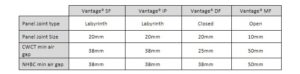
The above table describes BTS Vantage® rainscreen system panel types & minimum air gap requirements.
“It is important the designer and contractor are aware that that the minimum dimension is the absolute minimum. Building irregularities, insulation, and framework must never compromise the cavity gap.” – SSBE.
Rainscreen cladding is typically installed in layers of components, starting from the sheathing board out. Normally, the first component fitted would be the vapour/breather membrane (more typically known as the vapour control layer VCL).
The VCL attaches directly back to the sheathing board, and once in place, installation moves on to fitting the subframe back to the primary structure.
If insulation is required, this would now be installed along with appropriate passive fire protection products such as cavity barriers and finally the panels.
Manufacturer’s instructions for each product that is being installed should always be consulted and followed. Wherever possible we recommend complete tested systems are specified and sourced to ensure proven performance is achieved for the whole of the building’s life expectancy.
If specified, designed, and installed correctly – rainscreen cladding systems are not only perfectly safe, but an extremely popular choice for creating the final façade on many buildings.
Reputable product manufacturers should have and be able to share test data to demonstrate compliance with relevant building regulations and in particular structural, fire and energy performance.
Propriety rainscreen systems should be tested against CWCT Standard for systemised building envelopes to demonstrate compliance of the following performance criteria:
- Wind Resistance – Serviceability
- Wind Resistance – Safety
- Water Penetration – Dynamic Aero
- Impact Resistance – Hard and Soft Body
In layman’s terms, fire performance should comply with EN 13501-1 for component-level testing and large-scale system tests can also be carried out against BS 8414.
For detailed requirements and advice to comply with relevant building regulations, the following documentation should be referenced:
England & Wales
https://www.gov.uk/government/collections/approved-documents
Scotland
https://www.gov.scot/policies/building-standards/monitoring-improving-building-regulations/
Northern Ireland
http://www.buildingcontrol-ni.com/regulations/technical-booklet
ACM cladding consist of two skins of aluminium bonded to either side of a lightweight core of materials such as polyethylene (PE), polyurethane (PUR), profiled metal or a mineral core. It is a popular product because of its precise flatness, variety of surface finishes and colours, light weight and formability. However, during a fire, the panels can delaminate, exposing the core material.
Source: https://www.designingbuildings.co.uk/wiki/ACM_cladding
ACM core has several variations including polyethylene (ACM-PE) and mineral (ACM-A2)
High-Pressure Laminate (HPL) panels are a form of cladding typically manufactured by layering sheets of wood or paper fiber with a resin and bonding them under heat and pressure. They sometimes include additional chemicals to provide fire retardant properties and are available in a wide range of colours and finishes.
Source: https://www.designingbuildings.co.uk/wiki/HPL_cladding
Materials used for rainscreen cladding are limited to their proven fire performance in relation to building occupancy type and height. In the wake of the Grenfell tower tragedy, each of the UK’s home nations have undertaken extensive expert reviews of the guidance they issue. This guidance continues to evolve. It is imperative that specifiers and designers consult the latest published requirements relevant to the building location within the UK.
On June 1, 2022 the Department for Levelling Up, Housing and Communities (DLUHC) published updated guidance to help improve and clarify building regulations and fire safety guidance.
The amendments to Approved Document B now clarify ACM PE is no longer permitted for use on new build constructions or refurbishments regardless of building type or height. HPL and many types of timber cladding are also no longer suitable for use. We expect Scotland and Northern Ireland guidance to follow suite soon. Approved Document B updates will come into force on the 1st of December 2022.


